
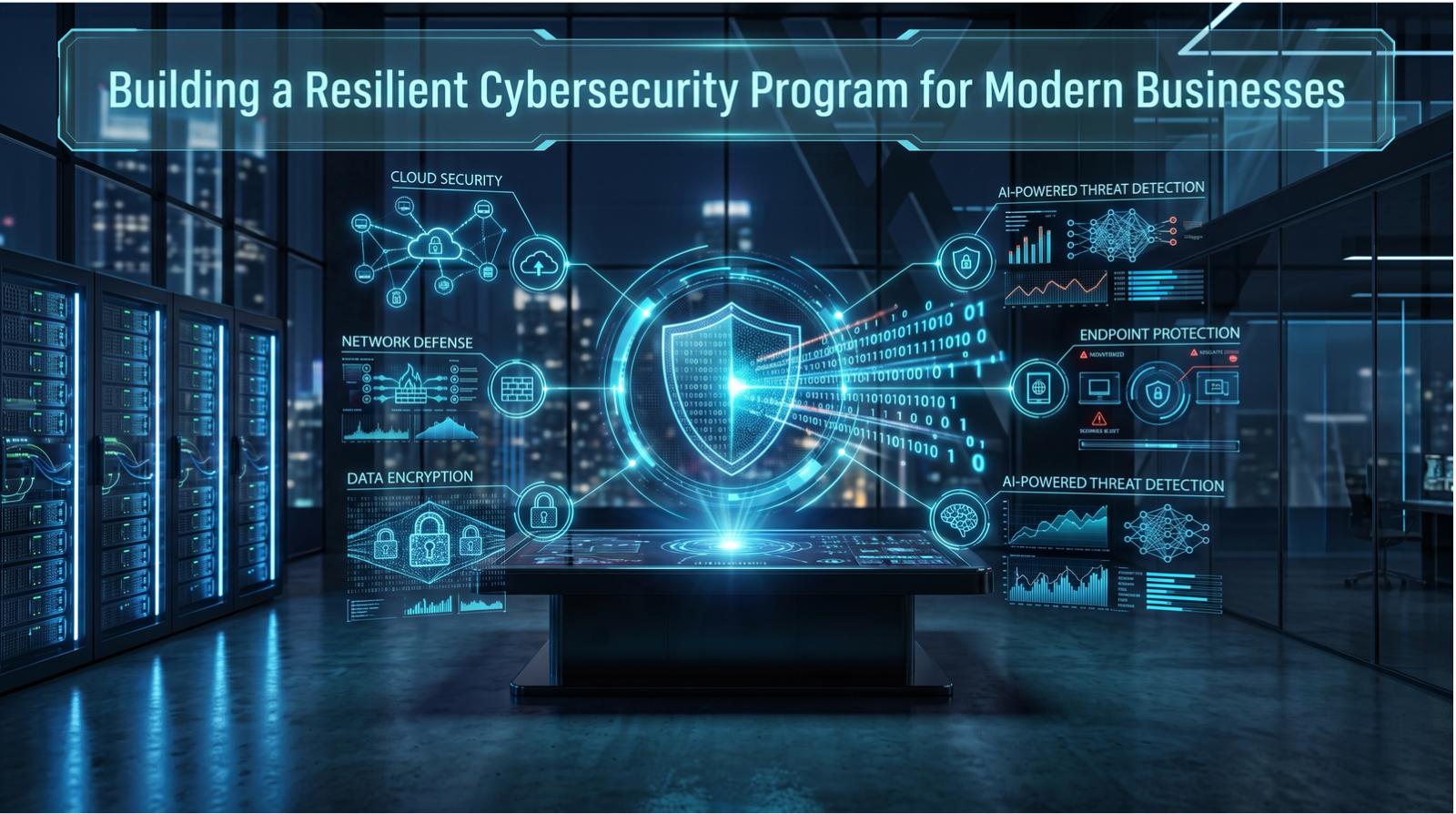
Cyberattacks no longer discriminate by size or sector. Startups, financial back-offices, IT services firms, and manufacturers alike now run on data and that data is exactly what attackers are after. Automated scanning tools probe for exposed servers, misconfigured cloud storage, and outdated software around the clock, and a single unpatched system can open the door to a full network compromise.
This is why organisations are turning to specialised cybersecurity consulting rather than relying on a single overworked IT admin. A dedicated partner brings structure, expertise, and accountability. Below, we cover the security challenges modern businesses face, the frameworks shaping compliance today, and the services a consultancy like Cybersniper trusted by companies across Pune offers to keep you resilient. Explore more at cybersniper.in.
The Evolving Threat Landscape
“Security” used to mean antivirus software and a firewall nobody had configured properly. That’s no longer enough. Attackers now automate reconnaissance at scale, chain together minor misconfigurations into major breaches, and increasingly use AI to accelerate their own attacks.
Regulatory pressure has grown alongside the threat landscape. Financial institutions answer to the RBI, listed companies and market intermediaries must satisfy SEBI’s cybersecurity framework, and any business handling personal data must account for India’s data protection law. Compliance is now a board-level concern with real financial and reputational stakes.
For a growing company, building a full in-house security team is expensive to justify early on but ignoring the risk is costlier still. This is the gap professional security consulting fills.
AI Security: Protecting the New Attack Surface
Artificial intelligence has become both a target and a tool. Organisations deploying machine learning models, generative AI features, or LLM-powered chatbots introduce a new class of risk that traditional security programs weren’t built to handle. AI security consulting addresses this directly:
- Model and data protection - securing training data, preventing data poisoning, and protecting proprietary models from theft or extraction.
- Adversarial testing - red-teaming AI systems for prompt injection, jailbreaks, and manipulation attempts before real attackers find them.
- Shadow AI governance - identifying unsanctioned AI tools employees adopt and bringing them under policy and access control.
- AI-enabled threat detection - using AI-driven monitoring to spot anomalies and automated attacks faster than manual review allows.
- Responsible AI compliance - aligning AI deployments with emerging governance frameworks and data protection obligations.
As more business processes get automated with AI, securing that layer is becoming as fundamental as securing the network itself.
ISO 27001 Certification: Structured Security by Design
ISO 27001 is often the first serious step toward structured information security moving from ad-hoc tools to a documented Information Security Management System (ISMS) that identifies risks, applies controls, and improves continuously.
For IT services firms, fintechs, and BPOs, ISO 27001 has become close to a prerequisite for enterprise and international contracts. Beyond the commercial benefit, the certification process itself builds discipline: asset inventories get created, access controls tighten, incident response plans get documented, and staff get trained.
A capable consulting partner runs a gap assessment against Annex A controls, designs policies that fit how the business actually operates, conducts internal audits, and supports the organisation through the certification body’s review.
Virtual CISO: Senior Leadership Without Full-Time Overhead
Not every organisation needs or can afford a full-time Chief Information Security Officer. A virtual CISO (vCISO) provides experienced, senior-level security leadership on a fractional basis: setting strategy, reporting to leadership, managing the security roadmap, and representing the organisation during audits and due-diligence calls.
A typical vCISO engagement covers risk assessment, policy development, third-party risk oversight, incident response planning, and regular reporting in language non-technical stakeholders understand. For fast-scaling companies, it’s often the most cost-effective way to mature a security program without a six-figure executive hire.
Penetration Testing: Finding the Cracks First
Policy documentation means little if the underlying systems are exploitable. Penetration testing has become standard practice not just for compliance, but because it reveals what an attacker could actually do.
A proper test goes beyond automated scanning. Skilled testers manually probe web applications, mobile apps, internal networks, APIs, and cloud infrastructure, mimicking real attacker techniques. The output should be a prioritised report showing which issues carry real business risk, how they could be chained together, and how to fix them followed by retesting once fixes are applied.
Data Privacy, RBI & SEBI Compliance
Data privacy consulting maps what personal data an organisation collects, where it’s stored, who has access, and how it flows the foundation of any credible privacy program.
Financial institutions carry added obligations. RBI compliance spans cybersecurity frameworks, incident reporting timelines, and business continuity expectations. SEBI compliance applies to brokers, mutual funds, and market participants, with its own cyber-resilience framework requiring regular audits and board-level reporting.
Many organisations also engage vDPO (virtual Data Protection Officer) services to manage data protection impact assessments, handle data subject requests, and keep privacy policies current as regulations evolve without hiring a full-time specialist.
Security Audits, Cloud Security & NIST CSF
Security audits give an independent view of an organisation’s posture reviewing policies, access controls, and compliance against a chosen framework, distinct from a penetration test’s focus on exploitable flaws.
Cloud security deserves particular attention, since most businesses now run infrastructure on AWS, Azure, or Google Cloud. Misconfigured storage, overly permissive IAM roles, unmonitored API keys, and shared-responsibility confusion are common gaps. Cloud security reviews check configurations, flag exposed resources, and help set up ongoing monitoring.
Many organisations align their broader program with the NIST Cybersecurity Framework Identify, Protect, Detect, Respond, Recover which pairs well with ISO 27001 to satisfy both international clients and domestic regulators.
How Cybersniper Helps
Cybersniper works with businesses across IT, fintech, manufacturing, and services including a strong base of clients in Pune to build security programs that are practical, not theoretical. Our services include:
- ISO 27001 certification support - gap assessments, policy development, audit readiness
- Virtual CISO (vCISO) services - fractional leadership and board-level reporting
- AI security consulting - model protection, adversarial testing, and AI governance
- Penetration testing - web, mobile, network, API, and cloud applications
- Data privacy consulting and vDPO services - data mapping and ongoing DPO support
- RBI and SEBI compliance consulting - framework alignment and audit preparation
- Security audit services - reviews against ISO 27001, NIST CSF, and regulatory requirements
- Cloud security assessments - configuration reviews, IAM audits, and continuous monitoring setup
Security doesn’t mean choosing between an enterprise budget and doing nothing at all. With the right partner, growing businesses in Pune and beyond can build a posture that satisfies regulators, reassures clients, and keeps attackers out.
Ready to assess where your organisation stands? Visit Cybersniper to talk about your specific risks, compliance needs, and next steps.